

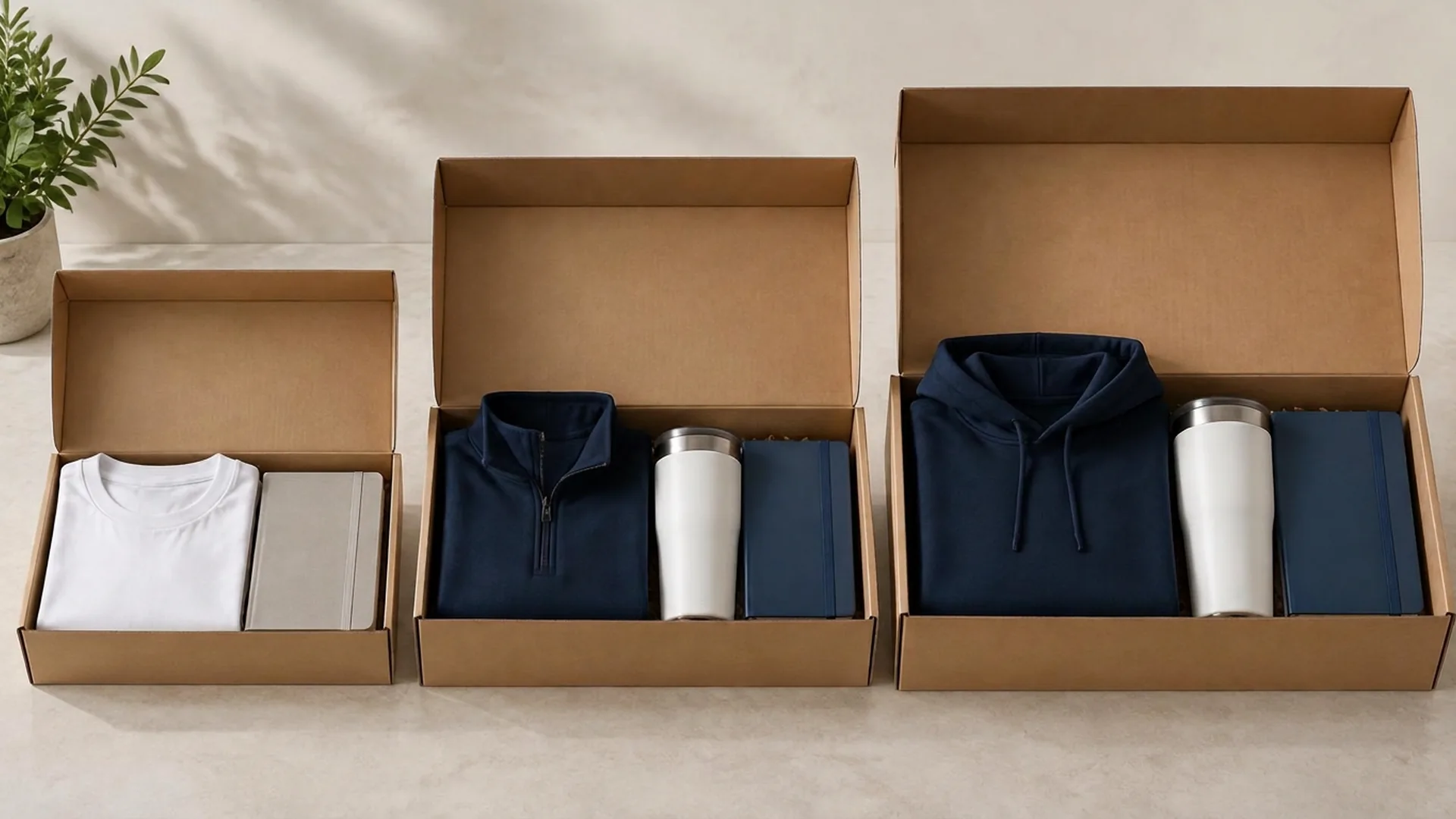
A strong onboarding kit has one item people wear, one item they use every day and one welcome message, packed so it arrives before the first day. Budget decides the quality and the number of extras.
Kits by budget
| Budget per hire | What to include |
|---|---|
| About $25 | T-shirt, notebook, pen, welcome card |
| About $50 | Hoodie or quarter zip, tumbler, notebook, welcome card |
| About $100 | Premium layer, insulated tumbler, tech accessory, notebook, custom box |
| About $150 and up | Premium outerwear or backpack, insulated tumbler, curated extras, custom box and printed insert |
Budgets are illustrative; your quote reflects your exact items and quantities.
Sizes and remote hires
Collect size and shipping address with the offer paperwork. Keep a small buffer of common sizes. Ship to arrive two to three business days before the start date.
Ship so it arrives before day one
A kit waiting at the door before the first day tells a new hire the company was ready for them. Trigger the kit when the offer is accepted, so production has a real window and shipping can stay on standard ground.
Keeping kits stocked
Produce components in bulk for a quarter or a year, store them with a fulfillment partner and release kits as people are hired. This lowers cost per kit and removes last minute rush orders.
Why it matters: in a PPAI study of 5,674 end users, 75.4 percent said they keep promotional products because they are useful.
Frequently asked questions
- What should be in a new hire welcome kit?
- One item to wear, one item to use daily and a welcome message. Common choices are a branded layer, a tumbler, a notebook and a card.
- How much do companies spend on onboarding kits?
- Most kits fall between about $25 and $150 per hire, depending on the role and the items.