

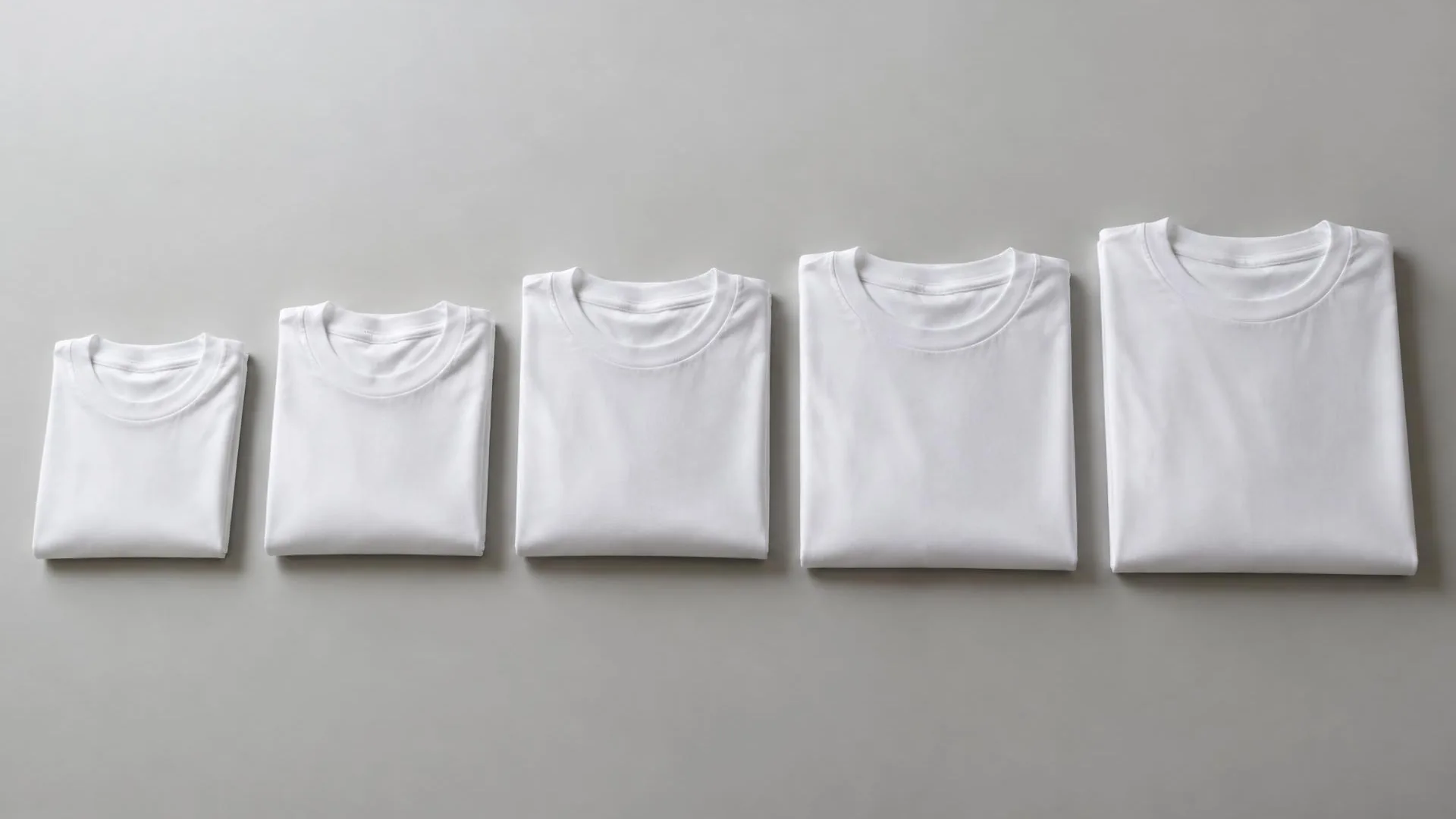
Apparel exchange rates are a hidden line item on every uniform program. The most common cause is the assumption that a large from one mill is a large from another.
Build a reference set
Order a fit sample of each size in every fabric you standardize on. Keep it in a labeled bin. Every future re-order references the bin.
Planning a size curve
Start from the sizes people chose on past orders, or ask for sizes when you collect names and addresses. Order a small buffer in the most common sizes and keep extended sizes available for every style.
Audit the return rate quarterly
Track exchanges by SKU and size. A single style that's off by a full letter is worth pulling and re-fitting; the amortized cost of chasing exchanges usually exceeds the cost of re-tooling.
Plan your size mixTurn a headcount into an exact quantity per size, with spares.FAQ
- How do I choose sizes for a company t-shirt order?
- Collect sizes from employees when possible. If you cannot, base the mix on past orders and keep a small buffer in the most common sizes.
- Why do sizes fit differently between brands?
- Each mill uses its own patterns, so a large in one brand can fit like a medium or extra large in another. Standardizing on a few styles keeps fit consistent.