

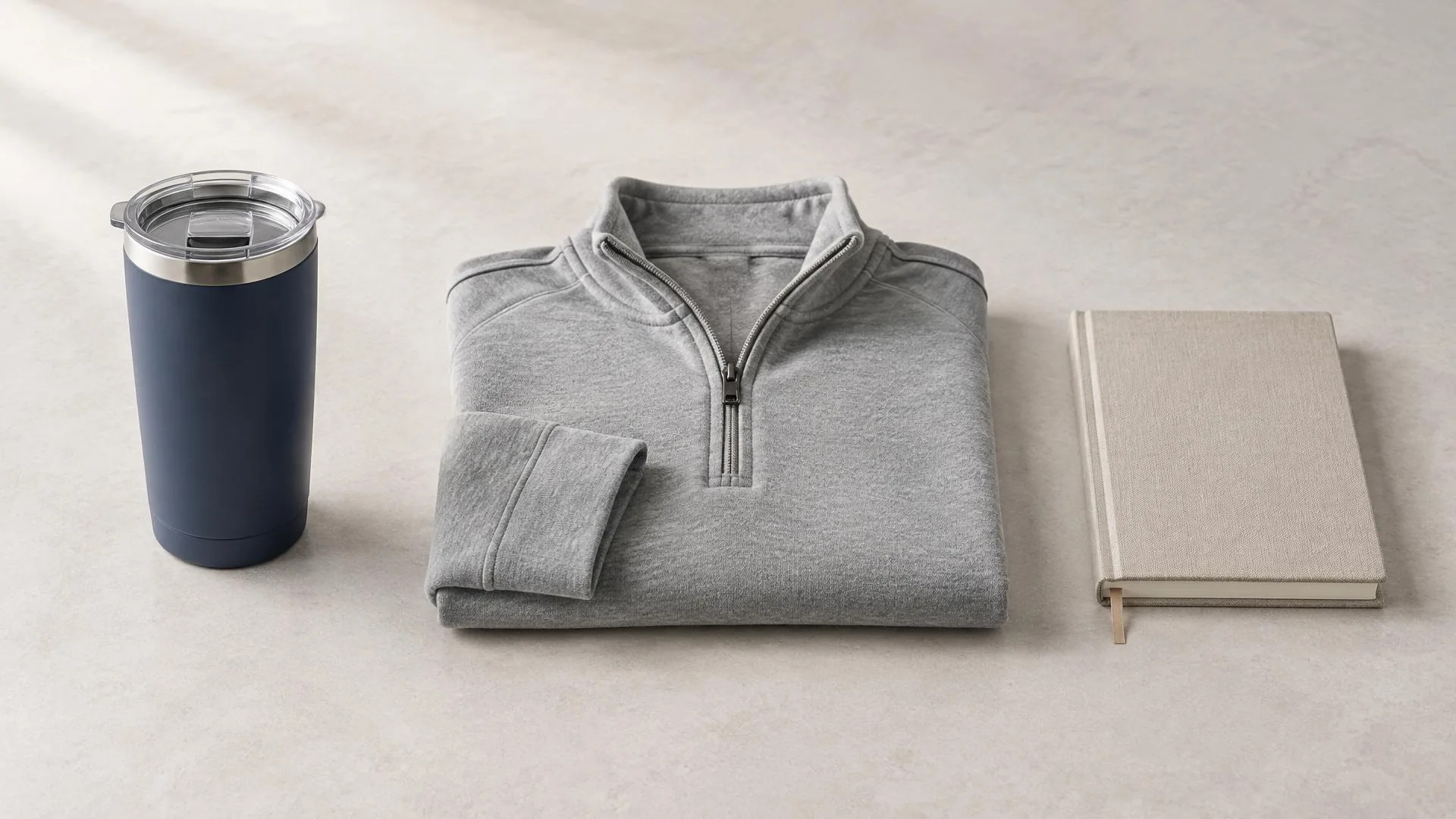
Most merch programs stall in the same place: the shortlist. Too many options, no clear audience frame, and every stakeholder finds a reason to defer. The fix is fewer products, chosen better.
Start with the audience
Before pricing a single SKU, write down who receives this and what you want them to feel or do when they open the box. Recruiters, field reps, VIP customers, and new hires all need different things.
Three is the magic number
Three options gives stakeholders a genuine choice without inviting paralysis. One is a decision by fiat; five is a committee meeting. Three forces the conversation into trade-offs.
What to include in each option
- The item, decoration method, and finish
- A unit price at the realistic order quantity
- Timeline from proof to dock
- One sentence on why this fits the audience
FAQ
- How many options should a merchandise shortlist have?
- Three. It gives stakeholders a real choice without slowing the decision.
- What should each shortlist option include?
- The item, decoration method, unit price at the real quantity, timeline and why it fits the audience.